WAYS TO SPRUCE UP YOUR DRINKING WATER

FUN ADDITIONS TO DRINKING WATER:
• Lime
• Lemon
• Orange
• Cucumber slices
• Mint leaves
• Basil leaves
• Strawberries
• Pineapple
• Blueberries
• Grated fresh ginger
• Stevia – Natural sweetener. Liquid form is best for cold water.
• Chia seeds – Good source of omega 3’s. Contain fiber, which help you stay full. No taste. Leave in your water for 5 minutes before drinking.

COMBINATIONS ALONE OR WITH A FEW DROPS OF STEVIA (for added sweetness):
• Lemon + cucumber
• Lemon + cucumber + basil
• Lime + cucumber + basil
• Cucumber + mint
• Blueberry + mint
• Strawberry + mint
• Strawberry + lime
• Strawberry + lime + mint

SPECIALTY COMBOS:
• Lemon + stevia + water = lemonade
• Lime + stevia + water = limeade
• Mint + lime + stevia + water = mojito
• Lemon + stevia + chia = chia lemonade
• Lime + stevia + chia = chia limeade

WHY WE NEED THE SUN

Vitamin D is perhaps the single most underrated nutrient in the world of nutrition. Statistics currently show that up to 40% of the U.S. population is vitamin D deficient. Many people are aware that vitamin D is critical for strong, healthy bones but what’s often overlooked is its importance for immune support. Vitamin D deficiency has been associated with conditions including Alzheimer’s disease, allergies, autoimmune disorders, cancers of the colon, breast, skin and prostate, depression, type 1 and 2 diabetes, heart disease, hypertension, infertility, obesity and osteoporosis.

Our bodies make vitamin D naturally when exposed to ultraviolet rays from sunlight. Vitamin D is also found in cod liver oil, salmon, mackerel, sardines, vitamin D fortified milk and orange juice and in the yolk of whole eggs. The issue with dietary vitamin D is you would have to drink 10 cups of fortified milk or orange juice daily, or eat salmon, sardines and mackerel 3 – 5 times a week in order to get the minimum requirements of vitamin D. Vegetarians and vegans should pay special attention to their vitamin D levels since it is only found in animal products. While foods and supplements are options, it seems the most efficient way to meet your vitamin D quota is through natural sunlight exposure.

Over the past several years due to increased awareness about the sun contributing to skin cancer, more people are using sunscreen on a regular basis. While sunscreen is extremely important for skin protection, using one with just SPF 8 reduces your ability to make vitamin D by more than 95%. This doesn’t mean you should avoid sunscreen, it means your body needs short periods of exposure to the sun without it. If you merely expose 6- 10% percent of your body, 3 – 5 times a week, that’s all you need for proper vitamin D synthesis. The basic recommendation is to go outside for 5 -10 minutes, enjoy the sun, make vitamin D and then put your sunscreen on. The darker your skin, the more sunlight is needed to activate vitamin D synthesis. For prolonged sun exposure apply a natural, chemical-free, SPF 15 + sunscreen (you can find these in health foods stores). While it is impossible to generate too much vitamin D from sunlight exposure, it is important not to over supplement; therefore a simple blood test to determine your current level of vitamin D is recommended.


NATURAL WAYS TO BOOST YOUR ENERGY

Why are we so tired to begin with? For most of us the reasons are: long work hours, lack of sleep, poor nutrition or too much stress. So what can we do about it? The following are 6 suggestions for natural energy boosts. Try to incorporate some of these into your daily regimen and lighten up on the caffeine.

Eat breakfast. Most people report better energy and mood throughout the day after eating a balanced breakfast. Combine protein and complex carbohydrates. Examples are: eggs with whole grain toast, oatmeal cooked in milk or a fruit smoothie with added yogurt or protein powder.

Eat frequent and balanced meals. Aim for meals every 3 – 4 hours with a snack in between if you have a long gap. Balance protein, carbohydrates and fat. Lean meats (protein) contain an amino acid which can boost brain chemicals that help you feel more alert and focused. Complex carbohydrates (whole grains, brown rice, beans, vegetables and whole fruits) fuel your brain, are the body’s quickest fuel source and raise serotonin levels – the “feel good” chemicals. Healthy fats such as seeds, nuts and avocado help prolong the emptying time of your stomach and keep you feeling full longer. Eating timely, balanced meals throughout the day will keep your blood sugars and energy stable.

Exercise. Even a 15 minute walk can boost your mood and energize you. Get moving outside when possible. The fresh air and sunshine will give you an extra kick. Increase your water consumption before and during a workout for added energy.

Drink more water. Mild dehydration can slow metabolism and sap your energy. Aim for half your body weight in ounces of water. Clear urine is also a good indication of adequate water intake. Due to their high water content fruits and vegetables are another way to increase daily water intake.

Avoid sweets. Sugar causes your blood sugar to spike and plummet, which can make you feel tired and moody.

Get adequate sleep. Your body repairs while you sleep. Adults should aim for 7 – 8 hours nightly. If you can’t achieve this then try to stay on a regular sleep schedule. Alcohol and sugar can interfere with sleep patterns. Electronic devices such as phones, computers and TVs stimulate the brain and make it difficult to wind down before bed. Turn off all devices at least 30 minutes before you go to sleep.

SPRING SOUP

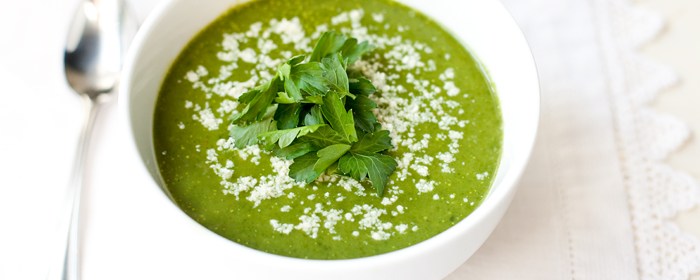
ASPARAGUS, SPINACH, CHARD & QUINOA SOUP

Ingredients
• 2 tablespoons extra-virgin olive oil, plus more for garnish
• 2 large yellow onions, chopped
• 1 bunch asparagus tips
• 1 teaspoon salt, divided
• 2 tablespoons plus 3 cups water, divided
• 1/4 cup quinoa
• 1 bunch green chard (about 1 pound)
• 14 cups gently packed spinach (about 12 ounces), any tough stems trimmed
• 4 cups vegetable broth, store-bought or homemade
• Big pinch of cayenne pepper
• 1 tablespoon lemon juice, or more to taste

Directions
1. Heat 2 tablespoons oil in large skillet over high heat. Add onions and 1/4 teaspoon salt; cook, stirring frequently, until the onions begin to brown, about 5 minutes. Reduce the heat to low, add 2 tablespoons water, and cover. Cook, stirring frequently until the pan cools down and then occasionally, always covering the pan again, until the onions are reduced and have a deep caramel color, 25 to 30 minutes.
2. While onions are cooking, bring a pot of water to a boil. Add the asparagus tips and blanch for one minute; then drain and transfer asparagus to a bowl full of ice water. Set aside.
3. Meanwhile, combine 3 cups water and 3/4 teaspoon salt in a soup pot or Dutch oven; add quinoa. Bring to a boil. Reduce heat to maintain a simmer, cover, and cook for 15 minutes. Trim the white ribs out of the chard (save for another use, such as to add to a stir-fry or other soup). Coarsely chop the chard greens and spinach.
4. When the quinoa has cooked for 15 minutes, stir in the chard greens. Return to a simmer; cover and cook for 10 minutes. When the onions are caramelized, stir a little of the simmering liquid into them; add them to the quinoa along with the spinach, asparagus, broth, and cayenne. Return to a simmer, cover, and cook, stirring once, until the spinach is tender but still bright green, about 5 minutes more.
5. Puree the soup in the pot with an immersion blender until perfectly smooth or in a regular blender in batches (return it to the pot). Stir in 1 tablespoon lemon juice. Taste, and add more lemon juice if desired. Garnish each bowl of soup with a drizzle of olive oil.

Makes eight servings.
Per serving: 97 calories/4 g protein/ 4 g fat

4 Memory Boosting Exercises

We may be growing up “young” but at some point we all start to forget things. Here are some simple tips I picked up recently from the Dr. Oz show:

1. Get out of your comfort zone.

– Use your non-dominant hand for regular activities such as: eating, writing, using a door key, blow drying your hair, brushing your teeth, wearing a watch, etc.

– Mirror writing: with both hands at the same time, write the mirror image of your name. Both hands should be moving out and away from each other simultaneously.

2.  Memorize your grocery list or any list. 

— Memorize 4 items at a time by making up a silly story w them.

3. Take 600-900g daily of a DHA Omega-3 supplement.

– DHA is the building block of brain cells. Reduces inflammation. Improves blood flow to the brain. Causes the memory part to grow.

4. Dance! It cross trains all areas of the brain – of course this one is my favorite.

brain-image-picture-clipart-4

Recent Entries »